Is porridge actually good for you?
Yes, for most people. Plain oats have a lot going for them, and the things that spoil a bowl are nearly all added afterwards.


Plain porridge is a good breakfast for most people. Oats contain 7.5g of fibre per 100g, enough to count as high fibre, and the British Heart Foundation lists them at 0g of sugar and 0g of salt for a 40g serving. The NHS names porridge as one of its higher-fibre breakfast options. What changes the answer is what you add, and what the maker of a flavoured sachet has already added for you.
What a plain bowl gives you
The panel on this page shows the BHF's figures for 40g of oats made with 250ml of semi-skimmed milk. Two things stand out if you read it the way you would read a pack.
The 12g of sugars looks high for a breakfast with nothing sweet in it. All of it comes from the milk, and the NHS does not count sugars naturally found in milk as free sugars, which are the ones its daily limit applies to. Made with water, the bowl is lower in energy and saturated fat, though you lose the protein and calcium that milk brings.
The fibre figure, 3.1g, is modest against the 30g an adult should aim for. Oats are a useful start and they leave plenty of room for fruit, nuts or seeds on top. Some of that fibre is beta-glucan, the soluble kind tied to the cholesterol claims you see on boxes. We look at those claims separately, because the amounts involved are more specific than the packaging suggests.
Does the type of oat matter?
Less than you would think. The BHF says groats, rolled oats and steel-cut oats all offer the same nutrition. They differ in texture and cooking time. Most porridge oats are rolled, either jumbo or the smaller, thinner sort, and the more finely they are processed, the faster they cook.
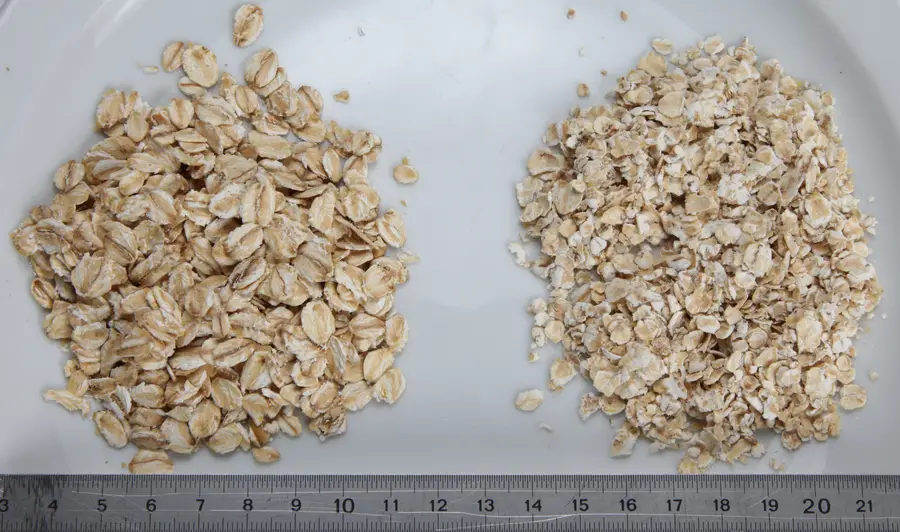

So buy on what you like eating and how long you have in the morning. Jumbo flakes are chunkier and take a little longer. Finer ones are quicker when you are short of time.
Are instant sachets a problem?
Not automatically. The BHF's view is that instant porridge is fine as long as it is not flavoured or sweetened. The catch is the flavoured range. Even varieties named after fruit, such as apple or blueberry, usually contain added sugar, so the name on the front tells you little.
Turn the sachet over and read the ingredients, which the NHS points out are listed in descending order of weight. If sugar sits near the top, you are buying sweetened oats. The sugar, salt and flavouring lines are the ones to compare, and the back of the box is the only place they appear.
The toppings question
This is where a sensible breakfast can drift. A tablespoon of golden syrup adds about 60kcal and 16g of sugar, which the BHF notes is over half of the 30g daily maximum of free sugars for an adult. Honey and maple syrup have a similar sugar content, and neither gets a pass for sounding more wholesome. The NHS counts the sugars in honey and syrups as free sugars in exactly the same way.
Things that work without that cost:
- Banana with a little nutmeg
- Berries, fresh or frozen, or stewed fruit
- Tinned apricots in juice with a spoon of yoghurt
- Nuts and seeds
Fruit toppings also count towards your 5 a day. If you buy tinned fruit, look for fruit in juice and not in syrup. Dried fruit is fine here too: the NHS says it is better for your teeth eaten as part of a meal, on cereal for instance, than picked at between meals.
And the traditional pinch of salt? The BHF suggests leaving it out, since too much salt can raise blood pressure over time. The adult limit is 6g a day and most of us get plenty from bread and other everyday foods already.
Overnight oats
Soaked oats have the same starting point as cooked ones, so the same logic applies to what you stir in. The one practical addition is the fridge. Official UK guidance on chilling food says to keep your fridge at 0 to 5°C, and to keep chilled food out of the fridge for no more than four hours while you prepare it. Milk and yoghurt need to stay cold, so mix the jar and put it straight in.
If you make yours with a plant drink, the oat milk article explains what to check for on the carton.
Who should take more care
Oats and coeliac disease need a proper word. Coeliac UK says standard oats are often grown or processed alongside wheat, barley and rye, so they can be contaminated and are unsafe on a gluten-free diet. Words such as "100% oats", "pure oats" or "organic" tell you nothing about this. Look for oats labelled gluten free, which means they test at 20 parts per million of gluten or less.
Even then, oats contain a protein called avenin, similar to gluten. Most people with coeliac disease can eat gluten-free oats without trouble, but a very small number remain sensitive. If symptoms continue, Coeliac UK advises reviewing it with a health professional.
Anyone with diabetes, or following a diet set by a dietitian or doctor, should stick with the advice they were given about carbohydrate portions. A general article cannot take that into account.
Our verdict on the bowl
Plain oats, a sensible amount of milk or a plant drink, and fruit or nuts on top is the version the evidence-based sources describe. Sweeten it from the fruit bowl if you can. If your favourite is a flavoured sachet with a good deal of sugar, it can still be a sometimes breakfast, and a plain pack kept alongside it is an easy swap on other days.
This article is general information and is not medical advice. Guidance changes, so check the linked sources for the current figures. Last reviewed 9 July 2026.